



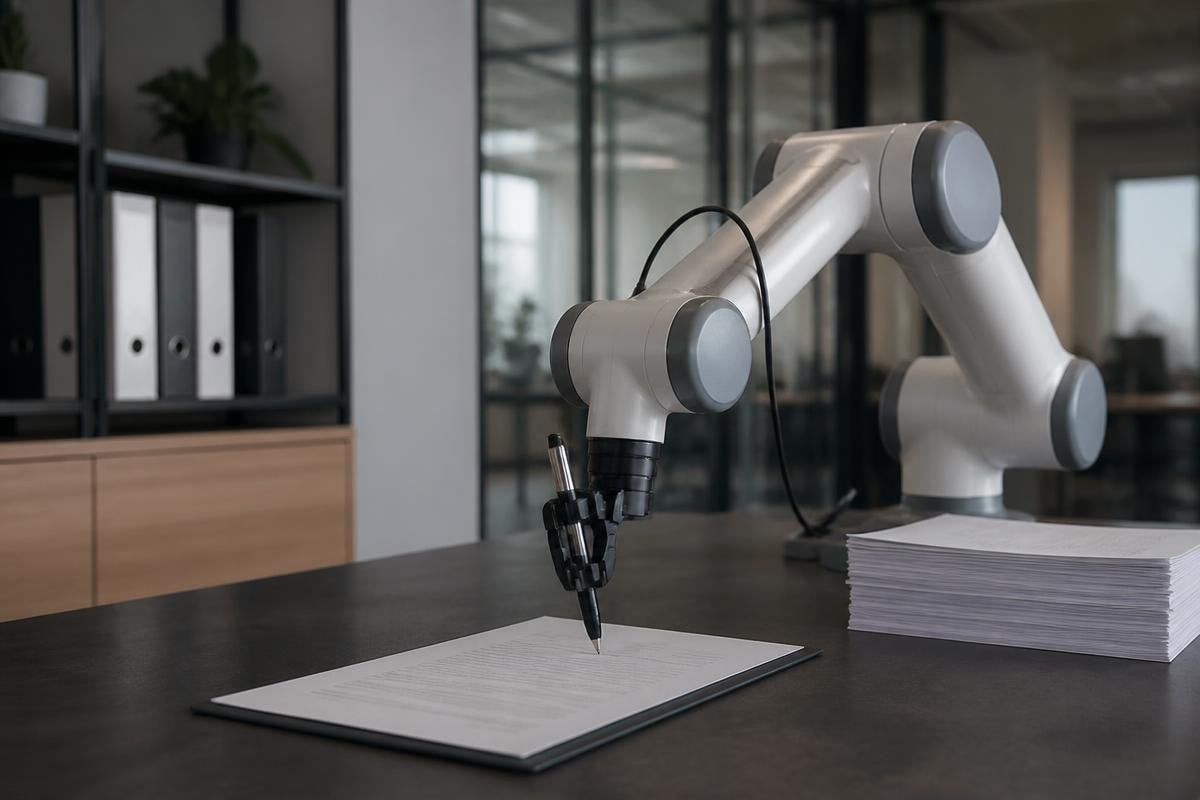
A robot can place marks on a page, type a name, or send an approval through software. That action alone doesn’t answer the harder question: who agreed to the contract, and can they show it?
- A signature records approval; it doesn’t create authority by itself.
- The contract should name the person or company responsible for the decision.
- Logs, access rules, and approval records matter more than the shape of the signature.
What the robot is actually doing
A robot can act as the last step in a signing process. It may stamp a document, apply a digital mark, or send a file after software checks a set of rules.
Those actions describe what the system did. They don’t explain why the agreement should bind a person or company.
That difference matters because a contract connects to an accountable party. A buyer needs to know which company made the promise, who had authority to approve it, and which record shows that approval. The robot may sit in the middle of that process, but the commercial decision still needs an owner.
A useful contract should therefore separate the machine’s action from the agreement itself. The document can record the robot’s system name, the time of the action, the account that approved it, and the company accepting responsibility.
The approval trail matters
A typed name is easy to copy. A complete approval record gives the other party something they can check when a dispute starts.
For a system that signs or sends contracts, keep the exact document version, the approving person or account, the date and time, the rules that allowed the action, and any change made after approval. These records help answer a narrow question: did the system follow an approved process for this document?
They don’t turn a broken process into a valid agreement. Access control also matters because ten people using one shared account can create a log that shows an action without showing who took it.
A named account and locked document record give the contract a clearer trail. A separate approval step can show when a person accepted the terms, while Robot24.com robotics coverage tracks the machines and software taking on more office tasks.
Where the legal risk sits
The risk grows when the robot can make choices that change the deal. A system that fills in a fixed price from an approved table raises one set of questions. A system that changes price, delivery terms, or cancellation rights raises another.
The contract should state the limits. Set the prices, products, approval levels, and expiry dates the system may use. Send unusual cases to a named person before the robot signs or sends anything.
The wording should also identify the party behind the system. A line such as “the platform approved this” leaves too much unsaid. The document should name the company, its contracting contact, and the system record tied to the approval.
No evidence pack or jurisdiction was supplied for this topic, so this article can’t state which local law would accept a particular electronic signature. That question belongs to a lawyer who can review the deal, the system, and the place where the contract will be used.
A practical check before deployment
Use this short review before letting a robot sign or send an agreement:
- Name the owner: record the company and person responsible for approval.
- Limit the rules: list the prices, terms, and deal types the system may accept.
- Lock the file: keep the approved document separate from later edits.
- Record each action: save the account, time, document version, and system result.
- Route exceptions: send any case outside the rules to a person.
- Test the record: confirm that someone else can follow the approval trail later.
I’d treat a robot’s signature as evidence of a process, not as proof that the process had authority. That distinction should be written into the contract and checked before the first automated approval is allowed.
The open question for each deployment is specific: can an independent reviewer identify the responsible party and rebuild the approval record from the saved files?
